News · 2026-05-16
Real Estate CRM Software: The 2026 Guide for Agencies, Brokers, and Developers
A comprehensive 2026 guide to real estate CRM software: listings, leads, opportunities, deals, tasks, communication, reporting, and daily operations in one platform.
Choosing real estate CRM software in 2026 is no longer about finding a better contact database. For serious agencies, brokers, and developers, the CRM has become the operating system for the whole business: listings, leads, contacts, opportunities, deals, tasks, documents, communications, reporting, and day-to-day team execution.
That is the real difference between a generic CRM and a real estate CRM. Generic platforms can store contacts and deals, but real estate teams need to manage the full commercial workflow from first inquiry to closed deal — and then keep the relationship alive for repeat business, referrals, rentals, resales, and new launches.
What “real estate CRM software” should mean in 2026
A modern real estate CRM should not only answer “who is this lead?” It should answer:
- Where did this lead come from?
- Who owns the follow-up?
- What is the client looking for?
- Which listings or projects match the requirement?
- What was already sent or discussed?
- What is the next task?
- Where is the opportunity in the pipeline?
- Which agent, source, listing, or campaign is producing revenue?
If the CRM cannot connect those answers, the team usually falls back into spreadsheets, WhatsApp messages, disconnected portals, and manager guesswork.
Why most CRMs still do not fit real estate operations
Many popular CRMs were designed for generic B2B sales. They work well when a company sells one product through a simple pipeline. Real estate is different. An agency may manage hundreds or thousands of listings, multiple buyer and tenant requirements, landlords and sellers, investors, portals, agents, teams, branches, projects, viewings, offers, reservations, documents, and long follow-up cycles.
That is why “customizing” a generic CRM often becomes expensive. You need custom objects for listings, workarounds for property requirements, separate tools for inventory, manual links between contacts and properties, and extra reporting just to understand what is happening.
The complete real estate operating workflow
The best real estate CRM software should support the entire operation, not only the sales pipeline.
1. Listings and property inventory
Listings should not live in a separate spreadsheet. Agents need searchable property records with location, price, type, availability, media, owner details, notes, and matching logic. Developers need project and unit visibility. Brokerages need a clean way to keep inventory usable by the sales team.
2. Lead capture from every source
Real estate leads arrive from property portals, Meta ads, Google ads, website forms, referrals, walk-ins, WhatsApp, phone calls, and imported lists. A CRM should centralize those inquiries and keep the source attached so managers can see which channels convert.
3. Contact and requirement management
A buyer is not just a name and phone number. The CRM should capture budget, location, property type, number of bedrooms, language, timeline, investment purpose, preferred communication channel, and urgency. This turns scattered notes into structured data that agents can actually use.
4. Opportunity-to-listing matching
This is where real estate CRMs become operationally valuable. When the system connects client requirements to available listings, agents can recommend relevant properties faster, follow up with better context, and avoid losing good opportunities because nobody remembered the right unit.
5. Pipeline and deal tracking
Real estate pipelines should reflect the actual journey: new lead, qualified, requirement captured, property sent, viewing booked, offer, negotiation, reservation, contract, closed, lost, or nurture. Managers need visibility into stuck opportunities before deals are lost.
6. Daily task and follow-up management
The difference between average and high-performing agencies is often follow-up discipline. A CRM should create clear next actions for calls, viewings, WhatsApp follow-ups, document requests, offer deadlines, and reactivation campaigns.
7. Communication context
Agents work across email, WhatsApp, phone, calendars, and meetings. The CRM should keep the relationship context visible so nobody has to ask, “What happened with this client?” every time an opportunity changes hands.
8. Team permissions and accountability
Real estate data is sensitive. Owners need control over who sees which leads, listings, contacts, deals, and reports. Managers need assignment visibility without micromanaging. Agents need enough access to sell quickly without creating data chaos.
9. Reporting for owners and managers
Good CRM reporting connects sources, agents, listings, pipeline value, conversion, response speed, and lost reasons. Without this, agencies are making decisions based on anecdotes instead of operating data.
Where RealEstateCRM.io fits
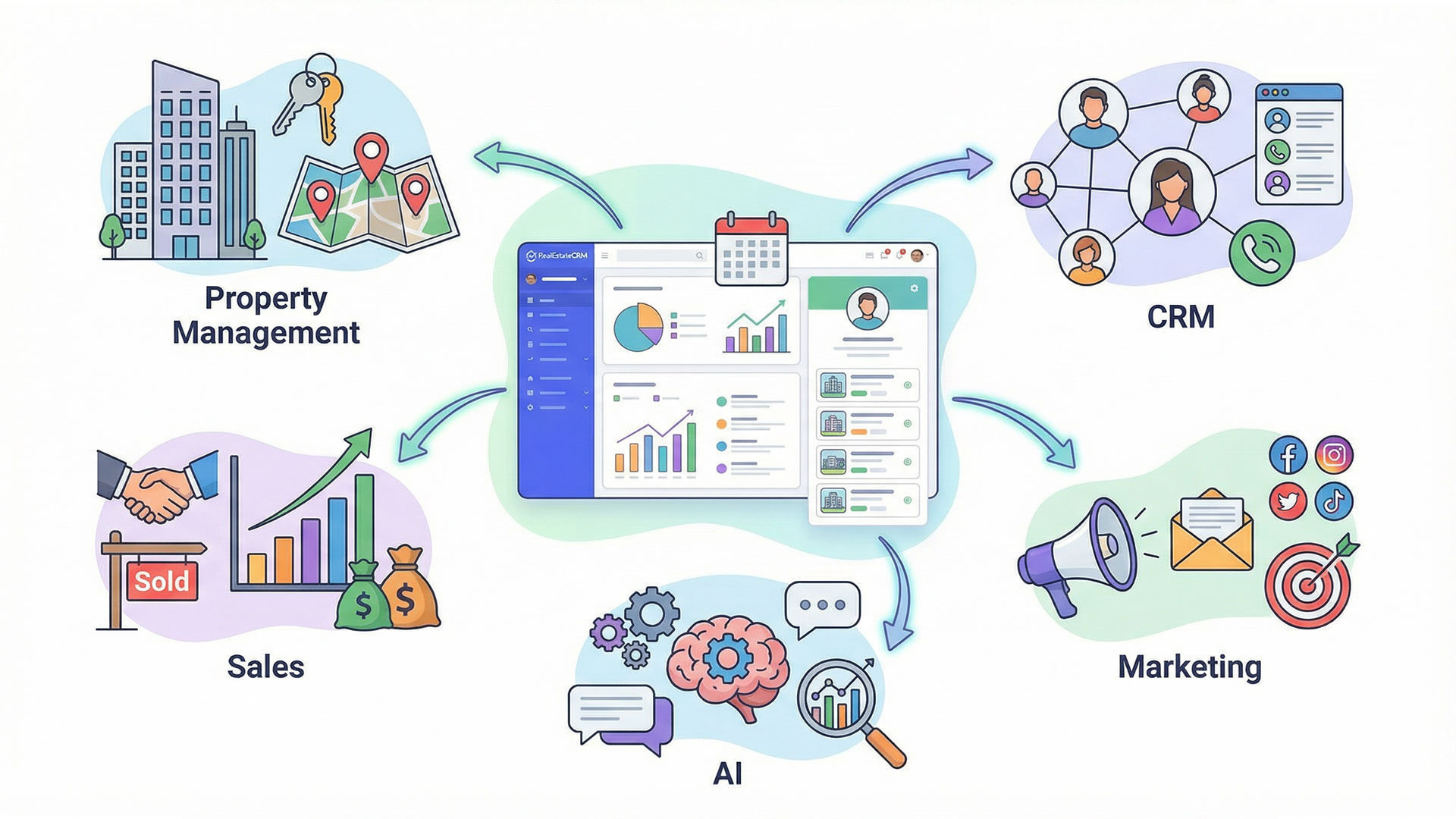
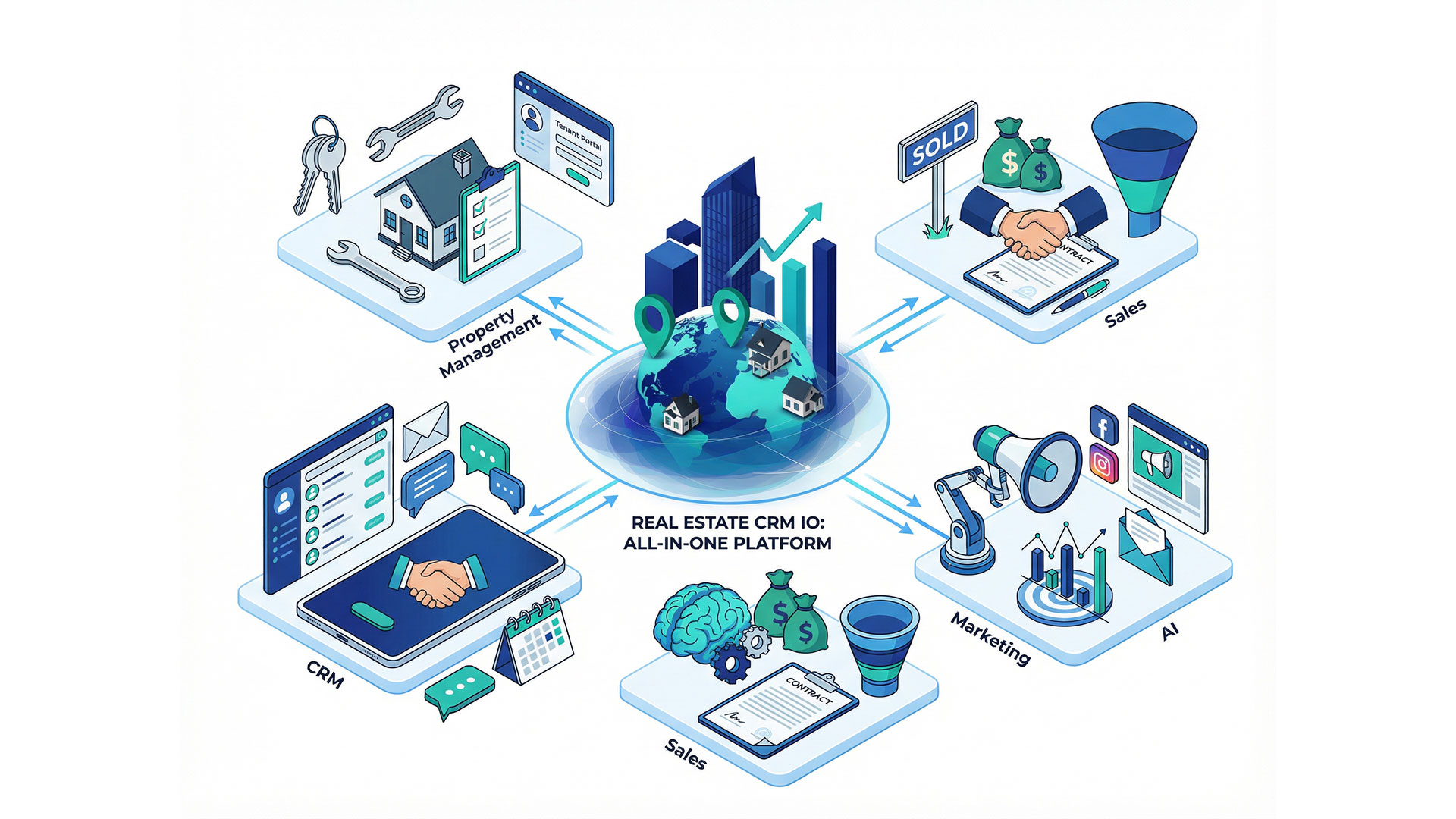
RealEstateCRM.io is built specifically for real estate teams that want one connected system for their operation. The goal is not to replace one spreadsheet with another digital table. The goal is to give agencies, brokers, and developers a practical operating platform from listings to closed deals and daily team execution.
Core workflows include:
- Lead and contact management
- Listings and buildings
- Opportunities and property requirements
- Deals and pipeline stages
- Tasks, notes, comments, and activity tracking
- Files and documents
- Email and WhatsApp workflows
- Google Workspace productivity
- Team permissions and manager visibility
- Reporting for source, pipeline, and performance
Who should use this type of CRM?
RealEstateCRM.io is a strong fit for:
- Real estate agencies managing multiple agents and lead sources
- Brokerages that need better visibility from inquiry to close
- Property developers selling projects and units through structured follow-up
- Teams operating across different languages, locations, and client types
- Managers who need pipeline discipline without slowing agents down
Evaluation checklist for 2026
Before choosing a CRM, ask these questions:
- Can it manage listings and client requirements in the same system?
- Can it match opportunities with relevant properties?
- Can it track the complete deal journey from inquiry to close?
- Can managers see agent activity, source performance, and stuck deals?
- Can the team onboard without a long consulting project?
- Does it support the daily habits agents already use, including email, WhatsApp, tasks, and files?
- Can permissions protect business data as the team grows?
Self-service onboarding and support
The right CRM should be powerful, but adoption should not be heavy. RealEstateCRM.io is moving toward a self-service onboarding model where teams can register interest, access videos, use the knowledge base, and get help through live chat or email support.
If your agency wants one platform for listings, leads, opportunities, deals, tasks, communication, and reporting, register your interest in RealEstateCRM.io. You can onboard with videos, the knowledge base, live chat, and email support — built for teams that want to move fast without losing control. Register your interest and apply for access.Register your interest in RealEstateCRM.io