Blog · 2026-05-16
Best Real Estate CRM Software in 2026: Pricing, Features, and Geography Compared
A fair 2026 comparison of RealEstateCRM.io, Follow Up Boss, Lofty, BoldTrail/kvCORE, Wise Agent, Top Producer, Propertybase, PropSpace, and generic CRMs by pricing, geography, and operational fit.
Choosing the best real estate CRM in 2026 depends on more than features. The right platform also depends on geography, pricing model, team size, sales workflow, listing operations, support model, and whether the CRM is built for agents only or for the full real estate business.
This comparison is written for agencies, brokers, and developers that want a practical view of the market. It does not claim that one platform is best for everyone. Instead, it compares where each option tends to fit: US-focused follow-up, lead generation, brokerage platforms, Dubai/MENA operations, enterprise customization, generic CRM flexibility, or a broader listing-to-close operating workflow.
Quick comparison summary
- RealEstateCRM.io
Best fit: Agencies, brokers, and developers that want listings, leads, opportunities, deals, tasks, communication, reporting, and daily operations in one real estate CRM
Pricing visibility: Register-interest / access-led while self-service rollout is prepared
Geography angle: Flexible international positioning: Southeast Asia, UAE, Europe, and global teams
Key limitation to check: Newer ecosystem; buyers should validate integrations and rollout needs - Follow Up Boss
Best fit: Real estate teams that prioritize speed-to-lead, lead routing, and follow-up discipline
Pricing visibility: Public pricing tiers are available
Geography angle: Strong US/Canada real estate ecosystem
Key limitation to check: Less positioned around full listing/project/inventory operations - Lofty
Best fit: Teams wanting CRM, AI, marketing, websites, and online lead generation together
Pricing visibility: Pricing usually requires sales/demo conversation
Geography angle: Strong North American agent/team orientation
Key limitation to check: May be more lead-gen/marketing-led than operations-led - BoldTrail / kvCORE
Best fit: Brokerages and teams wanting CRM, websites, lead generation, and behavioral automation
Pricing visibility: Pricing commonly requires inquiry/demo
Geography angle: Strong US brokerage/team ecosystem
Key limitation to check: Can be heavier than smaller or international teams need - Wise Agent
Best fit: Agents and small teams wanting affordable CRM, contacts, tasks, deals, landing pages, and support
Pricing visibility: Public/transparent pricing positioning
Geography angle: Mostly US/Canada real estate CRM positioning
Key limitation to check: Lighter for listing inventory, buildings/projects, and opportunity matching depth - Top Producer
Best fit: North American agents wanting established CRM, lead capture, MLS/property insights, and follow-up
Pricing visibility: Public pricing for CRM packages
Geography angle: North America / MLS-oriented
Key limitation to check: Less flexible for international teams or developer/project workflows - Propertybase
Best fit: Enterprise real estate teams wanting Salesforce-backed customization and listing workflows
Pricing visibility: Quote/implementation-led
Geography angle: Enterprise/global depending on implementation
Key limitation to check: Salesforce complexity and setup overhead - PropSpace
Best fit: Dubai/UAE real estate businesses wanting local-market CRM and property workflows
Pricing visibility: Pricing calculator / transparent regional pricing approach
Geography angle: Very strong Dubai/UAE focus
Key limitation to check: Regional specialization may be less flexible for broader international positioning - HubSpot / Salesforce / Zoho
Best fit: Teams wanting generic CRM ecosystems and broad customization
Pricing visibility: Public pricing is usually available by edition
Geography angle: Global, but not real-estate-native
Key limitation to check: Listings, matching, buildings, projects, and property workflows require customization
How to compare real estate CRM pricing fairly
CRM pricing is not only the monthly subscription. Real estate teams should also compare setup time, number of users included, required add-ons, support model, training, data migration, website/IDX dependency, SMS/email/phone costs, integration costs, and whether the platform needs custom implementation.
Public pricing is useful, but it can be misleading if one CRM is cheap and then requires extra tools for listings, lead forms, marketing automation, or reporting. The better question is: what does the agency need to run the business from listing to close?
Feature comparison: what matters operationally
- Lead capture and source tracking
Why it matters: Managers need to know which portals, ads, forms, referrals, and agents produce real opportunities.
RealEstateCRM.io angle: Built around centralizing leads and linking them to follow-up, opportunities, and reporting. - Listings and property inventory
Why it matters: Real estate teams sell or rent property, not generic products. Inventory must be connected to sales work.
RealEstateCRM.io angle: Listings and buildings are part of the core workflow, not an afterthought. - Client requirements
Why it matters: Budget, location, property type, language, timeline, and purpose drive every recommendation.
RealEstateCRM.io angle: Requirements can be structured inside opportunities instead of buried in chats or notes. - Opportunity-to-listing matching
Why it matters: Agents close faster when buyer demand and available inventory are connected.
RealEstateCRM.io angle: Positioned as a core workflow from inquiry to relevant recommendations. - Pipeline and deal tracking
Why it matters: Owners need visibility from inquiry to viewing, offer, negotiation, reservation, and closing.
RealEstateCRM.io angle: Deals and opportunities help managers see what is moving and what is stuck. - Daily tasks and operations
Why it matters: CRM adoption depends on daily habits: calls, viewings, follow-ups, documents, and next steps.
RealEstateCRM.io angle: Tasks, notes, comments, files, and activity history support daily execution. - Communication workflows
Why it matters: Real estate happens across email, WhatsApp, calls, calendars, and meetings.
RealEstateCRM.io angle: Designed to keep communication context connected to leads, opportunities, and deals. - Permissions and team control
Why it matters: Agencies need accountability without exposing all business data to every user.
RealEstateCRM.io angle: Team permissions and visibility support managers, agents, and business owners. - Reporting
Why it matters: Without reporting, teams cannot know which sources, agents, listings, or stages are working.
RealEstateCRM.io angle: Reporting is part of the operating system, not just a dashboard afterthought.
Competitor notes
Follow Up Boss
Follow Up Boss is a strong real estate CRM for lead routing, follow-up, agent adoption, and integrations. It is a very credible choice for teams that want speed-to-lead and follow-up discipline, especially in the US and Canada. Its public pricing also makes it easier to compare entry costs.
The main question for operations-led agencies is whether they also need deeper listing, building, project, and opportunity-to-listing workflows in the same system.
Lofty
Lofty positions around AI-powered CRM, marketing, online behavior, property signals, and lead conversion. It is a strong option when online lead generation, automation, websites, and AI-driven nurturing are central to the business.
For agencies that already have marketing channels and mainly need operational control, the question is whether they want a marketing-led platform or a real estate operating CRM.
BoldTrail / kvCORE
BoldTrail/kvCORE is built for brokerages and teams that want CRM, websites, lead generation, and automation together. It can be powerful for teams inside a North American brokerage ecosystem.
International agencies and smaller teams should compare complexity, onboarding, and whether the workflow fits their market without heavy adaptation.
Wise Agent
Wise Agent is known for affordability, contact management, tasks, deals, landing pages, marketing tools, and support. It can be a practical option for solo agents and smaller teams.
The tradeoff is operational depth. If a team needs listings, buildings, projects, structured requirements, opportunity matching, and manager-level operations, it should test whether the platform goes far enough.
Top Producer
Top Producer is an established North American real estate CRM with lead capture, client database, MLS/property insights, and follow-up workflows. It is relevant for agents who want CRM plus property intelligence in markets where those MLS workflows are central.
For international teams, brokerages, and developers, the key question is flexibility outside that North American property data environment.
Propertybase
Propertybase is Salesforce-backed and can support advanced real estate workflows, including listings and matching. It is often more relevant for enterprise teams that can justify Salesforce-style implementation and customization.
The tradeoff is complexity, cost, and implementation overhead. Many agencies do not want to build a CRM project before they can run their sales operation.
PropSpace
PropSpace is one of the most relevant regional competitors for Dubai and UAE real estate teams. It has strong local-market positioning and property workflow features, including lead/property matching and property management connections.
For teams outside Dubai/UAE, the comparison becomes flexibility: can the CRM adapt to multiple markets, languages, lead sources, property structures, and agency workflows?
Generic CRMs: HubSpot, Salesforce, and Zoho
Generic CRMs are mature and flexible. They are strong for general sales pipelines, reporting, automation, and integrations. But they are not designed around listings, buildings, units, buyer requirements, viewing workflows, property matching, and real estate deal stages by default.
They can work if the team has budget and technical resources for customization. But for many real estate businesses, the hidden cost is time: agents need to sell property, not maintain a custom CRM architecture.
Where RealEstateCRM.io is different
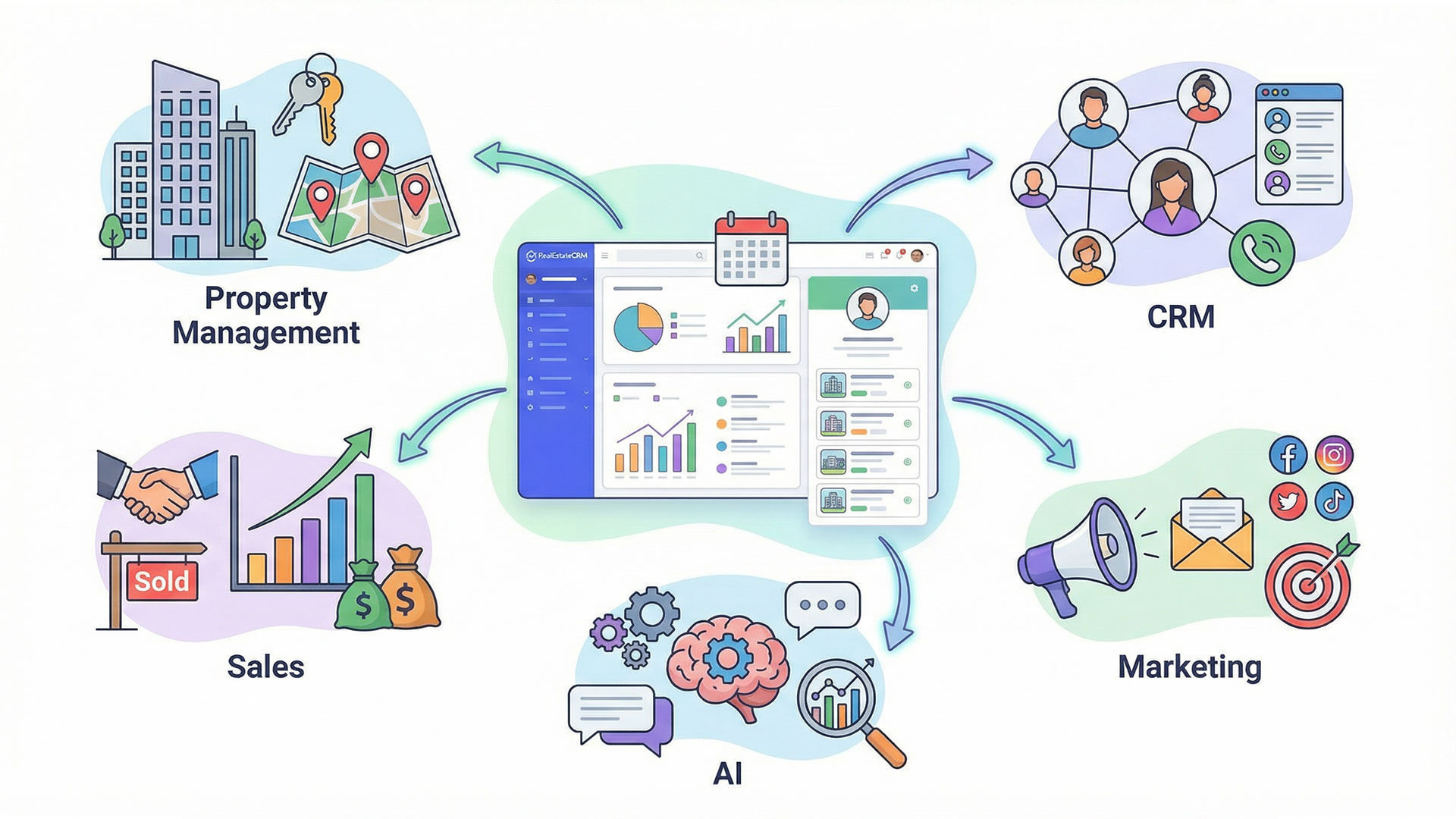
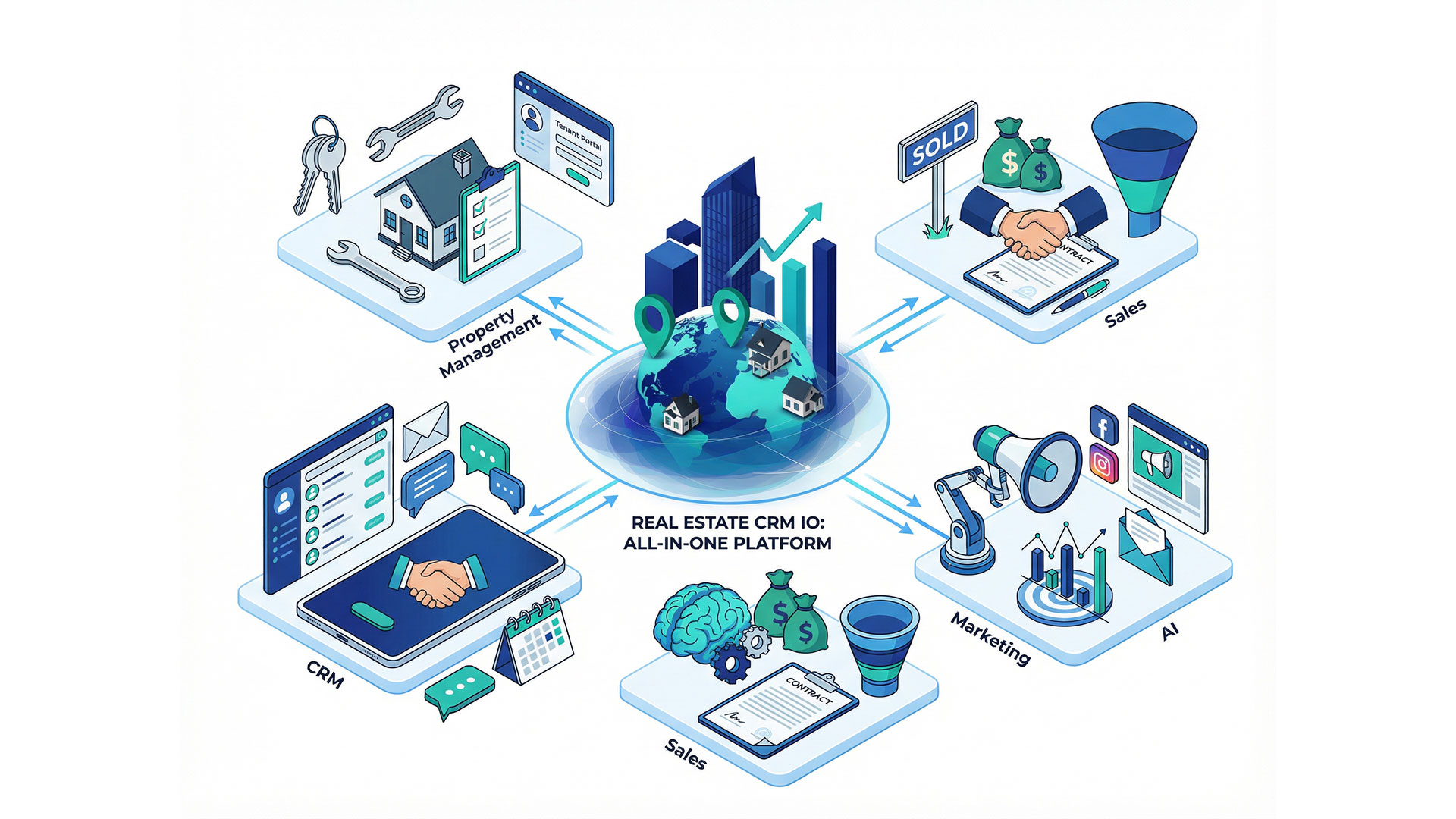
RealEstateCRM.io is positioned as a real estate operating CRM: a connected system for listings, leads, contacts, opportunities, deals, tasks, files, communication, permissions, and reporting.
The flexibility angle matters. Some competitors are strongly focused on the US/Canada real estate ecosystem. Some are regional, like Dubai/UAE-focused platforms. Some are enterprise-customization platforms. RealEstateCRM.io is being built for agencies, brokers, and developers that need a more flexible international workflow across Southeast Asia, UAE, Europe, and other global markets.
That does not mean every team should choose RealEstateCRM.io. It means teams should compare based on the workflow they actually need:
- If you mainly need US speed-to-lead follow-up, Follow Up Boss is strong.
- If you mainly need US-style IDX lead generation and marketing automation, Lofty or BoldTrail may fit.
- If you mainly need Dubai/UAE regional property workflows, PropSpace deserves comparison.
- If you need enterprise Salesforce customization, Propertybase may fit.
- If you want a real estate operating CRM from listing to close, RealEstateCRM.io is built around that direction.
Best-fit recommendation
RealEstateCRM.io is best suited for teams that want:
- One CRM for listings, leads, opportunities, deals, and daily work
- More flexibility across international markets
- A practical workflow for agencies, brokers, and developers
- Self-service onboarding with videos, knowledge base, live chat, and email support
- Manager visibility without forcing agents into heavy admin
If your team wants a flexible real estate operating CRM, register your interest in RealEstateCRM.io and apply for access. The goal is to help teams onboard through videos, the knowledge base, live chat, and email support — without forcing every agency into a heavy sales-led implementation.Register your interest in RealEstateCRM.io
Register your interest in RealEstateCRM.io